Vinayaka Ashtottram in Telugu PDF: A Comprehensive Plan
This plan details accessing Vinayaka Ashtottram in Telugu PDF format, exploring resources like Stotranidhi.com, ePoojaStore.com, and Vedasaram. It focuses on downloadable PDFs, mobile app availability, and understanding the 108 names.
Vinayaka Ashtottram, a sacred hymn dedicated to Lord Ganesha, comprises 108 names, each embodying a unique aspect of the deity. The Telugu PDF versions of this Ashtottara Shatanamavali are highly sought after by devotees for daily recitation and ritualistic purposes. These PDFs provide a convenient and accessible way to connect with the divine energy of Ganesha, particularly for Telugu-speaking communities.
The practice involves chanting these names, often accompanied by offerings and prayers, believed to bestow blessings of wisdom, prosperity, and the removal of obstacles. Several online platforms, such as Stotranidhi.com and ePoojaStore.com, specialize in providing these texts in a downloadable PDF format. Vedasaram also offers free Telugu PDFs, expanding access to this powerful stotra. The availability of these resources ensures that devotees can easily incorporate Vinayaka Ashtottram into their spiritual routines, fostering a deeper connection with Lord Ganesha.
Significance of Ashtottara Shatanamavali
The Ashtottara Shatanamavali, meaning “108 names,” holds immense significance in Hindu traditions. For devotees of Lord Ganesha, the Vinayaka Ashtottram specifically, reciting these names is considered highly auspicious. Telugu PDF versions facilitate widespread access to this powerful practice, allowing individuals to benefit from its spiritual potency.
Each of the 108 names reveals a different facet of Ganesha’s divine attributes – his power, wisdom, and compassionate nature. Chanting the names is believed to invoke his blessings, removing obstacles and paving the way for success. The Telugu language PDFs are particularly valuable for those who prefer to connect with the stotra in their native tongue, enhancing comprehension and devotion. Platforms like Stotranidhi.com and ePoojaStore.com provide these resources, ensuring the tradition remains accessible. Regular recitation, using these readily available PDFs, is thought to foster inner peace and spiritual growth.
The Deity: Lord Ganesha
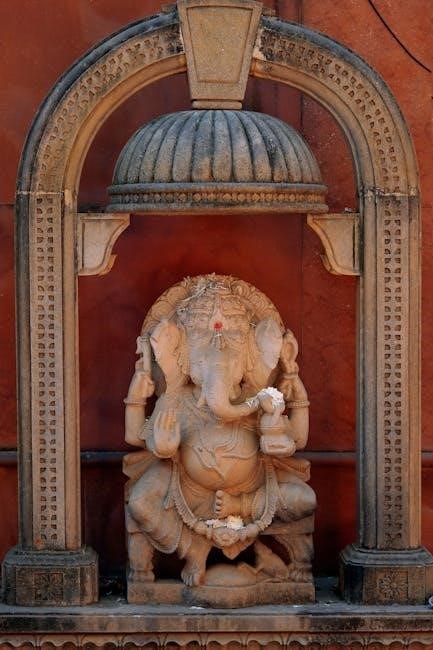
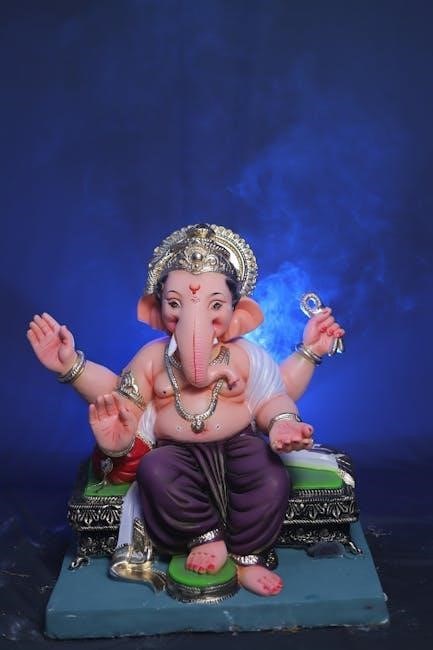
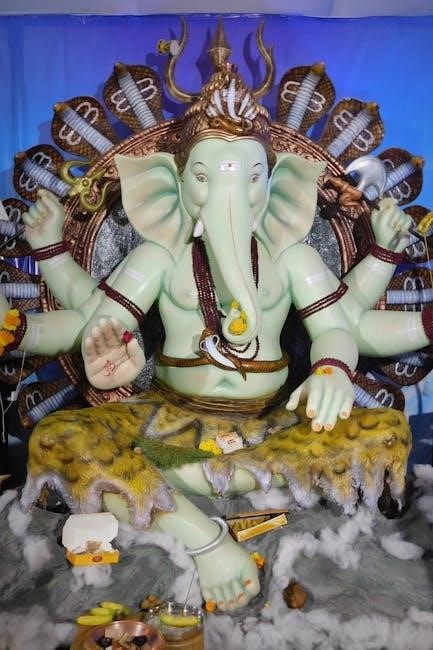
Lord Ganesha, the elephant-headed deity, is universally revered as the remover of obstacles and the god of beginnings. He embodies wisdom, intellect, and auspiciousness, making him one of the most beloved figures in the Hindu pantheon. The Vinayaka Ashtottram, available in Telugu PDF format, is dedicated entirely to praising and invoking his divine presence.
Within the context of the 108 names, each epithet highlights a unique aspect of Ganesha’s personality and powers. Accessing these names through Telugu PDFs allows devotees to deepen their understanding and connection with the deity. Resources like Vedasaram and online stores offer these texts, facilitating a more intimate devotional experience. The practice of reciting the Ashtottram is believed to please Ganesha immensely, leading to blessings of prosperity, success, and spiritual advancement. His form, often depicted with a modak and a mouse, symbolizes abundance and humility, further enriching the devotional practice facilitated by these Telugu resources.
Origins and Historical Context
The Vinayaka Ashtottram, a hymn consisting of 108 names of Lord Ganesha, boasts a rich historical lineage deeply embedded within Hindu tradition. While pinpointing a precise origin date proves challenging, its roots likely trace back to the Puranic period, evolving through centuries of devotional practice and scriptural development. The availability of the text in Telugu PDF format signifies its continued relevance and accessibility to a wider audience.
Historically, the recitation of the Ashtottara Shatanamavali – of which the Vinayaka Ashtottram is a specific instance – was primarily an oral tradition, passed down through generations of priests and devotees. The advent of printing and, subsequently, digital formats like PDFs, has democratized access to this sacred hymn. Resources like Stotranidhi.com and ePoojaStore.com play a crucial role in preserving and disseminating these texts, ensuring their continued practice and study within the Telugu-speaking community and beyond.
Availability of Telugu PDF Versions
Numerous online platforms offer the Vinayaka Ashtottram in Telugu PDF format, catering to diverse user preferences. Stotranidhi.com stands out as a dedicated repository of Telugu eBooks, including the Sri Vinayaka Ashtottara Shatanamavali, readily available for download. ePoojaStore.com also provides access, often listing it alongside related Ashtottara Shatanamavali variations – such as those for Vigneshwara – enhancing searchability.
Furthermore, Vedasaram and other websites host free Telugu PDFs of the stotram, broadening accessibility. These PDFs typically present the 108 names in Telugu script, alongside potential transliterations or translations. The ease of downloading and sharing these files contributes to the widespread availability of this devotional practice. Users can also find versions through social media links and online communities dedicated to Hindu scriptures, ensuring convenient access for personal or communal recitation.
Stotranidhi.com as a Source
Stotranidhi.com emerges as a prominent and reliable source for obtaining the Vinayaka Ashtottram in Telugu PDF format. The website specifically lists “శ్రీ వినాయక అష్టోత్తరశతనామావళి” – Sri Vinayaka Ashtottara Shatanamavali – within its extensive collection of Telugu eBooks. Its user-friendly interface allows for direct download of the PDF, facilitating easy access for devotees.
Beyond simply providing the PDF, Stotranidhi.com offers supplementary resources like errata, mobile apps, and contact information for support. The site’s dedication to Telugu devotional literature is evident through its organized structure and regular updates, with the content last updated on June 21, 2024. Furthermore, Stotranidhi fosters a community through discussion forums and social media links (YouTube, Facebook, Instagram, Telegram, Twitter, Pinterest), enriching the user experience and promoting engagement with the stotram and related practices.
ePoojaStore.com Resources
ePoojaStore.com provides access to the Vinayaka Ashtottram, cataloged under various related search terms including “sri-vigneshwara-ashtottara-shatanamavali,” “ganesha ashtottara shatanamavali,” and “vinayaka ashtottara shatanamavali.” While the site doesn’t explicitly state a direct Telugu PDF download on the main search result page, it serves as a valuable directory for locating the stotram.
The platform’s strength lies in its comprehensive categorization of pooja-related materials. Users can explore different variations of the Ashtottara Shatanamavali, potentially leading to Telugu versions available through linked resources or partner sites. ePoojaStore.com also offers related items and services, enhancing the overall spiritual shopping experience. Although a direct PDF link isn’t immediately apparent, diligent searching within the site or utilizing the provided keywords may uncover Telugu versions or direct users to reliable download sources. It functions as a central hub for devotees seeking resources related to Lord Ganesha and his associated prayers.
Vedasaram and Free Telugu PDFs
Vedasaram is presented as a source for finding the Vinayaka Ashtottara Shata Namavali in Telugu. The website specifically mentions “వినాయక అష్టోత్తర శత నామావళి తెలగలో” – which translates to “Vinayaka Ashtottara Shata Namavali in Telugu.” This indicates a direct offering or a link to the stotram in the Telugu language.

The site’s focus is on providing free Telugu PDFs of various religious texts, making it a potentially valuable resource for devotees. However, navigating the website and locating the specific PDF may require some searching, as the interface isn’t always straightforward. Users should look for direct download links or pages dedicated to Ganesha stotras. Furthermore, the availability of the PDF can change, so regular checks are recommended. Vedasaram aims to disseminate Vedic knowledge in Telugu, and the Vinayaka Ashtottram aligns perfectly with this mission, offering a readily accessible spiritual practice for Telugu-speaking individuals.
Understanding the 108 Names
The Vinayaka Ashtottara Shatanamavali comprises 108 sacred names of Lord Ganesha, each imbued with specific meanings and significance. These names aren’t merely labels but potent mantras capable of invoking divine blessings. Understanding the essence of these names deepens the devotee’s connection with the deity. The Telugu PDF versions often include transliterations and translations, aiding comprehension for those unfamiliar with Sanskrit.

Each name highlights a different aspect of Ganesha’s personality, powers, and form. For example, names like ‘Gajananaaya Namaha’ refer to his elephant head, while ‘Vighnaraajaya Namaha’ acknowledges him as the Lord of Obstacles. Reciting these names with awareness and devotion is believed to remove obstacles, bestow success, and promote spiritual growth. The Telugu PDFs serve as a guide, allowing devotees to learn the correct pronunciation and meaning, enhancing the efficacy of their practice.
Meaning of Key Names (Examples)
Delving into specific names reveals profound symbolism. “Gajananaaya Namaha”, meaning “salutations to the one with the elephant face,” emphasizes Ganesha’s unique form, representing wisdom and discrimination. “Ganaadhyakshaya Namaha” translates to “salutations to the chief of the Ganas,” highlighting his leadership over celestial beings. These Telugu PDF resources often provide detailed explanations of such names.
“Vighnaraajaya Namaha”, meaning “salutations to the Lord of Obstacles,” doesn’t imply Ganesha causes problems, but rather has the power to remove them. Understanding this nuance is crucial. The PDFs available online, like those from Stotranidhi.com and ePoojaStore.com, frequently offer interpretations in Telugu, making the meanings accessible. Reciting these names with understanding amplifies their spiritual benefit. The provided examples demonstrate how each name encapsulates a facet of Ganesha’s divine attributes, enriching the devotee’s experience.

Gajananaaya Namaha
“Gajananaaya Namaha”, a central name within the Vinayaka Ashtottram, directly translates to “salutations to the one with the elephant face.” This isn’t merely a physical description; the elephant head symbolizes immense wisdom, strength, and a discerning intellect. Telugu PDF versions, readily available from sources like Vedasaram and Stotranidhi.com, often elaborate on this symbolism, connecting it to Ganesha’s role as the remover of obstacles.
The elephant’s large ears represent attentive listening, while the trunk signifies the ability to grasp both the subtle and the manifest. Reciting this name, particularly when utilizing a Telugu script PDF, fosters a deeper connection with these qualities. ePoojaStore.com resources may offer audio pronunciations to aid correct recitation. Understanding the profound meaning behind “Gajananaaya Namaha” enhances the meditative experience and unlocks the name’s spiritual power, as detailed within the downloadable PDFs.
Ganaadhyakshaya Namaha
“Ganaadhyakshaya Namaha” signifies “salutations to the chief of the Ganas,” the celestial beings and attendants of Lord Shiva. This name highlights Ganesha’s leadership role and authority within the divine hierarchy. Telugu PDF resources, such as those found on Stotranidhi.com, often explain that the Ganas represent various aspects of consciousness and energy, and Ganesha governs their harmonious functioning.
Accessing the Vinayaka Ashtottram in Telugu PDF format allows for a detailed study of this concept. ePoojaStore.com may provide supplementary materials explaining the Ganas’ roles. Reciting “Ganaadhyakshaya Namaha” invokes Ganesha’s power to organize and streamline energies, both within oneself and in the surrounding environment. Vedasaram offers free Telugu PDFs that delve into the etymological roots of the name, revealing its deeper significance. Correct pronunciation, aided by online resources, is crucial for experiencing the full benefits of this powerful invocation.
Vighnaraajaya Namaha
“Vighnaraajaya Namaha” translates to “salutations to the Lord of Obstacles.” However, this isn’t merely about creating difficulties; it’s about having the power to remove them. Telugu PDF versions of the Vinayaka Ashtottram, available on platforms like Stotranidhi.com, often elaborate on this nuanced meaning. Ganesha, as Vighnaraaja, tests devotion and ultimately clears the path for success.

Downloading a Telugu PDF from ePoojaStore.com provides access to interpretations explaining how obstacles are opportunities in disguise. Reciting this name invokes Ganesha’s grace in overcoming challenges. Vedasaram’s free Telugu PDFs may offer insights into the symbolic representation of obstacles within Vedic philosophy. Understanding the correct pronunciation, crucial for effective chanting, can be found through online audio guides. The Vinayaka Ashtottram, in Telugu script, allows for a deeper connection with this powerful aspect of Lord Ganesha, fostering resilience and faith.
Benefits of Reciting Vinayaka Ashtottram
Reciting the Vinayaka Ashtottram, particularly in Telugu using a downloaded PDF from sources like Stotranidhi.com or ePoojaStore.com, yields numerous benefits. It is believed to remove obstacles – vighnas – from one’s path, fostering success in endeavors. Telugu translations within these PDFs enhance understanding and devotion.
Regular chanting improves concentration and mental clarity, aiding in spiritual growth. Accessing free Telugu PDFs from Vedasaram allows consistent practice. The 108 names, when recited with correct pronunciation (guides often accompany online resources), invoke Ganesha’s blessings for wisdom and prosperity. Furthermore, it’s said to enhance creativity, protect against negativity, and promote harmonious relationships. Mobile app availability makes recitation convenient. Ultimately, consistent practice, guided by a Telugu PDF, cultivates a deeper connection with Lord Ganesha, leading to inner peace and fulfillment.
Correct Pronunciation in Telugu
Achieving correct pronunciation of the Vinayaka Ashtottram in Telugu is crucial for maximizing its benefits. While downloadable PDFs from sites like Stotranidhi.com and ePoojaStore.com provide the text, accurate vocalization requires additional effort. Many online resources offer audio recitations, allowing listeners to mimic the sounds. Vedasaram, offering free Telugu PDFs, may also link to pronunciation guides.
Pay close attention to the inherent sounds of Telugu, which differ from English. Specific names, like “Gajananaaya Namaha” (ఓ గజాననాయ నమ), require careful articulation. Utilize YouTube channels and online communities dedicated to Hindu mantras for pronunciation assistance. Consistent practice with audio aids, alongside the Telugu PDF text, will improve accuracy. Correct pronunciation ensures the mantras resonate effectively, fostering a deeper spiritual connection and unlocking the full potential of the stotram. Remember that proper enunciation is key to invoking Lord Ganesha’s blessings.
How to Download and Use Telugu PDF Files
Downloading Vinayaka Ashtottram Telugu PDF files is straightforward from resources like Stotranidhi.com, ePoojaStore.com, and Vedasaram. Typically, a simple click on the provided link initiates the download. Ensure your device has a PDF reader installed – Adobe Acrobat Reader is a widely used, free option. Once downloaded, open the file to view the stotram text in Telugu script.

For optimal use, consider bookmarking frequently recited names. You can also print the PDF for offline access during puja or recitation. Mobile users can utilize PDF reader apps on their smartphones or tablets for convenient portability. When following along, cross-reference with audio pronunciations (available online) to ensure correct recitation. Remember to respect the sanctity of the text and handle the PDF with reverence. Regular practice with the downloaded PDF will deepen your connection to Lord Ganesha and the power of the Ashtottram.

Mobile App Availability
While dedicated mobile apps specifically for Vinayaka Ashtottram in Telugu PDF format are not extensively advertised, several options provide access to related content. Many Hindu devotional apps include stotras and mantras, potentially featuring the Ashtottram text in Telugu. These apps often offer features like audio recitation, synchronized lyrics display, and offline access after downloading content.
Alternatively, general PDF reader apps (Adobe Acrobat Reader, Google PDF Viewer) allow you to open and read downloaded Telugu PDF files on your smartphone or tablet. This provides flexibility in choosing your preferred reader and managing downloaded files. Searching app stores using keywords like “Telugu stotras,” “Ganesha mantras,” or “Hindu devotional” may reveal suitable applications. Ensure the app supports Telugu script rendering for proper display of the text. Regular updates to these apps often include improved functionality and content additions, enhancing your devotional practice on the go.
Social Media Links & Online Communities
Numerous online communities and social media groups cater to Hindu devotees and Telugu speakers, offering resources and discussions about Vinayaka Ashtottram. Platforms like Facebook, Instagram, Telegram, and YouTube host channels dedicated to devotional content, including stotras and mantras. Stotranidhi.com, a key source for Telugu PDFs, actively maintains a presence on these platforms, sharing updates and resources.
Searching for relevant hashtags (e.g., #VinayakaAshtottram, #GaneshaMantras, #TeluguStotras) can connect you with like-minded individuals and groups. These communities often share downloadable PDFs, pronunciation guides, and interpretations of the 108 names. Online forums and discussion boards provide spaces to ask questions, share experiences, and deepen your understanding. Engaging with these communities fosters a sense of connection and supports your spiritual practice; Remember to verify the authenticity of shared resources before downloading or using them.
Variations in Texts (Vinayaka vs. Vigneshwara)
When searching for Vinayaka Ashtottram in Telugu PDF format, you may encounter variations in the deity’s name – Vinayaka and Vigneshwara. Both names refer to Lord Ganesha, but subtle differences exist in their emphasis and associated traditions. Some texts, like those available on ePoojaStore.com, specifically list “Sri Vigneshwara Ashtottara Shatanamavali” alongside “Ganesha Ashtottara Shatanamavali” and “Vinayaka Ashtottara Shatanamavali”.
These variations often reflect regional preferences or specific lineages of worship. The core 108 names remain largely consistent across texts, but the introductory verses and concluding prayers might differ. When downloading PDFs from sources like Vedasaram or Stotranidhi.com, carefully review the title and description to understand which form of Ganesha the stotram addresses. Understanding this nuance ensures you are reciting the appropriate version aligned with your devotional practice. Ultimately, both Vinayaka and Vigneshwara represent the same divine energy, and sincere devotion is paramount.
Related Stotras and Mantras
Alongside the Vinayaka Ashtottram in Telugu PDF, several other stotras and mantras enhance devotion to Lord Ganesha. The Ganesha Pancharatnam Stotram, a concise hymn of five verses, is widely popular and readily available in Telugu script through resources like Stotranidhi.com. Similarly, the Sankata Nashana Ganesha Stotram, known for removing obstacles, complements the Ashtottram’s benefits.
For mantra practice, the “Om Gam Ganapataye Namaha” mantra is fundamental, often recited before or after the Ashtottram. Exploring the Ganesh Gayatri Mantra provides further spiritual depth. Many Telugu PDF collections, including those found on ePoojaStore.com, bundle these related stotras and mantras alongside the Ashtottram for comprehensive worship. Vedasaram also offers access to various Ganesha-related texts. Integrating these supplementary practices amplifies the positive effects of reciting the Vinayaka Ashtottram, fostering a deeper connection with the deity and promoting overall well-being.
Concluding Thoughts on the Practice
The Vinayaka Ashtottram, readily accessible in Telugu PDF format from sources like Stotranidhi.com and ePoojaStore.com, offers a powerful pathway to connect with Lord Ganesha. Regular recitation, aided by correct pronunciation – resources for which are increasingly available online – cultivates positivity and removes obstacles. Downloading and utilizing these PDFs, alongside mobile app options, makes the practice convenient and accessible.
Beyond simply reciting the 108 names, understanding their meanings, as exemplified by names like Gajananaaya and Vighnaraajaya, deepens the devotional experience. Whether accessed through Vedasaram’s free PDFs or other online platforms, consistent practice yields significant benefits. Embracing this tradition, enriched by related stotras and mantras, fosters spiritual growth and a stronger connection to the divine. Ultimately, the Vinayaka Ashtottram is a timeless practice, offering solace, guidance, and blessings to all who engage with it sincerely.